
Introduction
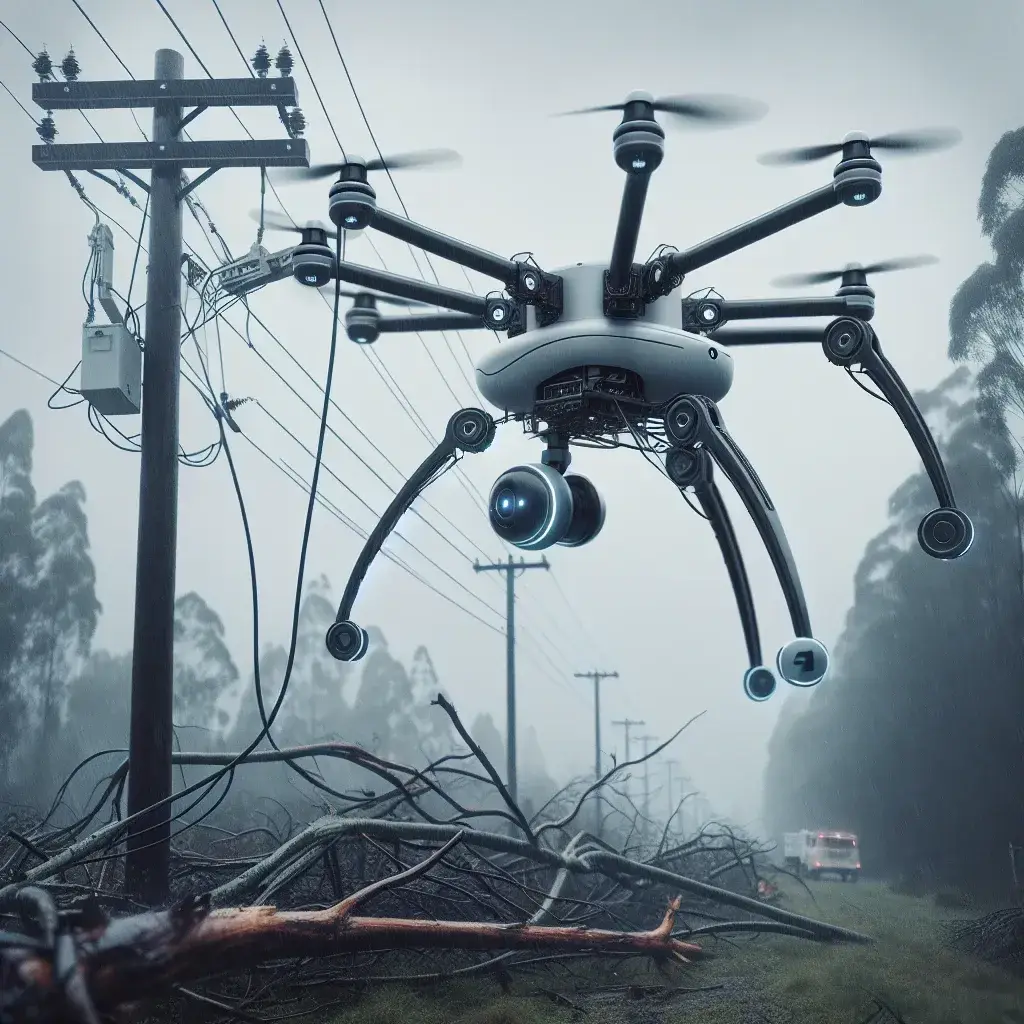
In recent years, severe weather events have increasingly disrupted power supply across the globe. Storms can cause extensive damage to power lines, leading to outages that affect thousands of households and businesses. In response, innovative technologies are emerging to tackle these challenges. Among these, AI powered robotic drones are becoming pivotal in autonomously restoring power lines after storms, showcasing remarkable advancements in engineering and artificial intelligence.
The Need for Innovation
Power outages during storms can have dire consequences, from safety hazards to economic losses. Traditional methods of restoring power often involve manual inspections and repairs, which can be time-consuming and dangerous. As storms become more frequent and severe due to climate change, the urgency for efficient power restoration methods has never been greater.
Historical Context
The use of drones in various industries isn’t new. However, their application in power line restoration is relatively recent. Traditionally, utility companies relied on line workers to physically inspect and repair damaged infrastructure. This method, while effective, poses risks to human life and often leads to prolonged outages. The introduction of drones has transformed this landscape, allowing for quicker assessments and repairs.
How AI Powered Drones Work
AI powered drones are equipped with advanced technologies that enable them to perform complex tasks autonomously. These drones utilize machine learning algorithms to analyze data collected from their surroundings. Here’s how they function:
- Data Collection: Drones are equipped with high-resolution cameras and sensors that capture images and data of power lines and surrounding vegetation.
- Damage Assessment: Using sophisticated image recognition software, the AI analyzes the collected data to identify and classify damages such as downed lines, broken poles, or tree obstructions.
- Automated Repair Coordination: Once damage is detected, the drones can autonomously coordinate with ground crews to initiate repairs. They can even deliver tools or materials needed for the repair.
Benefits of AI Powered Drones
The implementation of AI powered robotic drones in power restoration offers numerous benefits:
1. Enhanced Safety
By taking on the dangerous task of inspecting damaged power lines, drones significantly reduce the risk to human workers. This aspect is vital in storm-affected areas where conditions can be hazardous.
2. Speed of Restoration
Drones can quickly assess damage over large areas, allowing utility companies to respond faster and minimize downtime. This efficiency is crucial in restoring power to affected communities.
3. Cost-Effectiveness
While the initial investment in drone technology may be high, the long-term savings through reduced labor costs and improved operational efficiency are substantial. Drones can cover more ground in less time, making them a cost-effective solution for power restoration.
4. Environmental Impact
Using drones can minimize the ecological footprint of power line inspections. Ground vehicles often cause soil erosion and damage to vegetation, but drones operate with minimal impact on the environment.
Real-World Applications
Several utility companies have already begun to implement AI powered drones in their operations. For instance, companies in the Midwest have deployed drones after severe storms to assess damage and prioritize repair efforts. The results have been encouraging, showing a significant reduction in the time taken to restore power.
Case Study: A Successful Implementation
In a notable case, a utility company in Florida faced extensive damage from Hurricane Idalia in 2023. Following the storm, they deployed a fleet of AI powered drones to survey the damage. The drones identified over 300 instances of downed lines within hours, enabling repair crews to prioritize their work effectively. The company reported a 30% reduction in outage times compared to previous storms.
Future Predictions
As technology continues to evolve, the capabilities of AI powered drones are expected to expand further. Future developments may include:
- Improved AI Algorithms: As machine learning advances, drones will become more adept at identifying and predicting potential issues before they occur, allowing for proactive maintenance.
- Integration with Smart Grid Technology: Drones could become integral components of smart grids, providing real-time data and enhancing the overall efficiency of power distribution networks.
- Collaboration with Robotics: Future drones may work in tandem with ground-based robotic systems to carry out repairs, further streamlining the restoration process.
Challenges and Limitations
While AI powered drones offer many advantages, challenges remain:
1. Regulatory Hurdles
The use of drones is subject to regulations that can vary by region. Compliance with these regulations can pose challenges to widespread adoption.
2. Technical Limitations
Current drone technology may face limitations in adverse weather conditions, such as high winds or heavy rain, which could hinder their effectiveness during storms.
3. Public Perception
As with any new technology, public acceptance is crucial. Educating the public about the safety and efficiency of drones in power restoration will be necessary for broader adoption.
Conclusion
AI powered robotic drones are poised to revolutionize the way utility companies respond to power outages caused by storms. Their ability to autonomously assess and coordinate repairs not only enhances safety and efficiency but also reduces the environmental impact of restoration efforts. As technology continues to advance, we can expect further improvements in the capabilities of these drones, ultimately transforming the landscape of power line restoration for the better.