
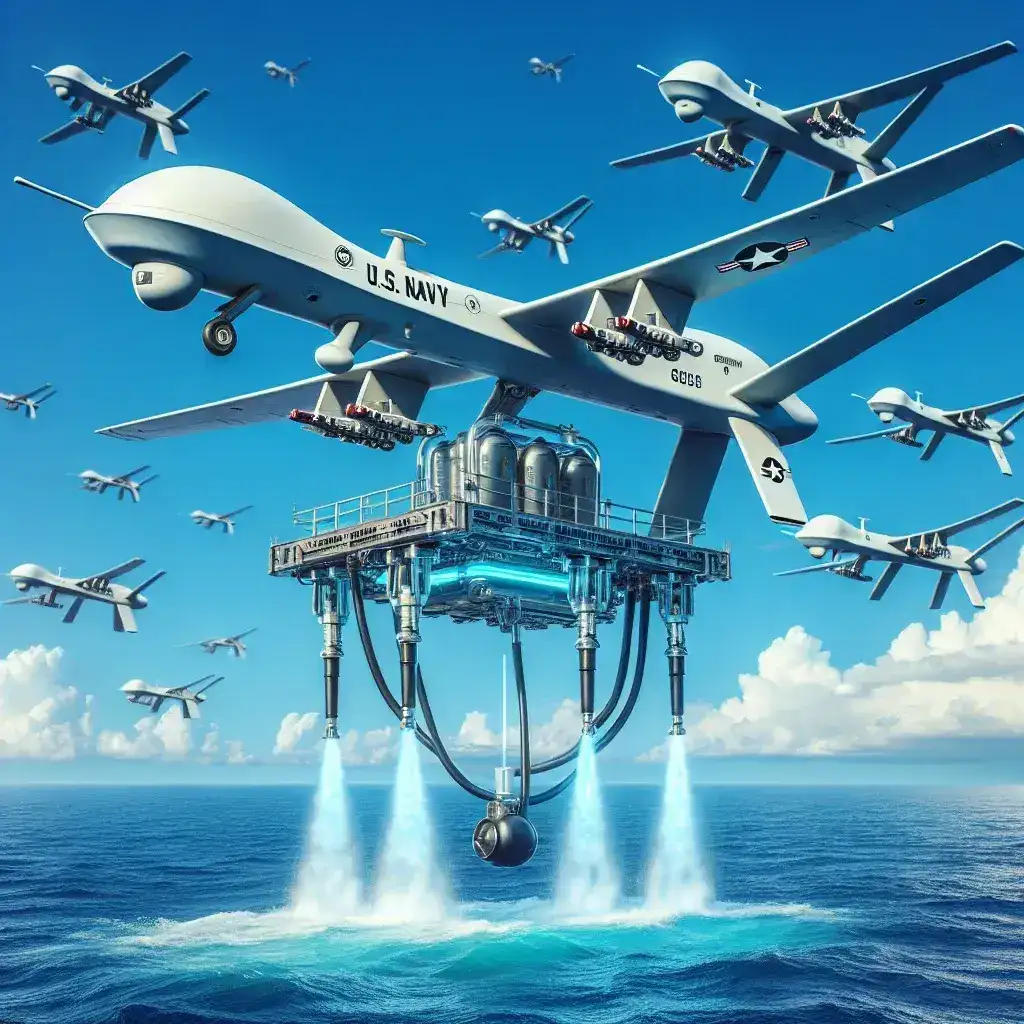
The Evolution of Aerial Refueling in the U.S. Navy
The U.S. Navy has always been at the forefront of technological innovation, particularly in the realm of aerial refueling. This essential capability allows naval aircraft to extend their range and operational time, providing a strategic advantage during missions. Over the years, the methods and technologies used for aerial refueling have evolved significantly, and the latest development is the integration of artificial intelligence (AI) into unmanned aerial refueling systems.
What Are Unmanned Aerial Refueling Systems?
Unmanned aerial refueling systems are drones designed to refuel military aircraft mid-air. Unlike traditional refueling methods that require a piloted tanker aircraft, these unmanned systems aim to automate the process, reducing risks and increasing efficiency. The integration of AI in these systems represents a significant leap forward, enabling greater precision and responsiveness.
AI-Powered Innovations
The incorporation of AI into unmanned aerial refueling systems enables a variety of enhancements:
- Autonomous Flight: AI algorithms allow drones to navigate complex airspace autonomously, minimizing the need for human intervention.
- Real-Time Data Analysis: AI systems can analyze data from various sensors to adapt to changing conditions and optimize refueling operations.
- Enhanced Safety: With AI managing flight paths and refueling procedures, the risk of human error is significantly reduced.
Historical Context
The concept of aerial refueling dates back to the early days of aviation, but it became critical during World War II. The Navy adopted refueling techniques to support long-range missions, leading to the development of specialized aircraft like the KA-6D Intruder. As technology progressed, the need for more efficient systems became evident, paving the way for unmanned refueling solutions.
Current Developments
Recent advancements have led to the U.S. Navy actively piloting AI-powered unmanned aerial refueling systems. These pilots are not only tests of technology but also essential assessments of operational processes. The Navy is evaluating how well these systems can integrate with existing fleet operations and whether they can be deployed in various combat scenarios.
Benefits of AI-Powered Systems
- Cost Efficiency: By automating refueling, the Navy can reduce operational costs associated with manned missions.
- Increased Mission Flexibility: Unmanned systems can be deployed in scenarios where traditional tankers may be at risk, enhancing mission versatility.
- Enhanced Endurance: Drones capable of refueling not only extend the range of aircraft but also their overall mission endurance.
Challenges and Concerns
While the benefits are significant, there are challenges to adopting AI-powered unmanned refueling systems:
- Technical Reliability: Ensuring that AI systems operate flawlessly under various conditions is paramount for mission success.
- Cybersecurity Risks: As with any connected technology, there is a risk of hacking or cyber interference that could compromise missions.
- Operational Integration: Seamlessly integrating these systems into traditional naval operations poses logistical and training challenges.
Future Predictions
Looking ahead, the U.S. Navy’s commitment to piloting AI-powered unmanned aerial refueling systems is likely to yield further advancements:
- The development of hybrid systems that combine unmanned and manned capabilities.
- Ongoing improvements in AI algorithms for better decision-making during missions.
- Potential expansion of refueling capabilities to allied nations, enhancing collaborative defense operations.
Conclusion
The U.S. Navy’s initiative in piloting AI-powered unmanned aerial refueling systems marks a significant milestone in military aviation. As these technologies mature, they promise to enhance operational efficiency, reduce risks, and revolutionize aerial combat strategies. The ongoing evolution of aerial refueling capabilities speaks to the Navy’s commitment to maintaining its technological edge in an ever-changing defense landscape.